
Fog: Nature's Hidden Freshwater Resource | EnergeticWater
Discover how fog naturally collects freshwater, supports ecosystems and provides sustainable water resources for communities facing increasing water scarcity.
Fog: Nature's Silent Water Harvester
How Tiny Droplets Can Sustain Ecosystems and Human Communities
For most people, fog is simply a weather phenomenon that reduces visibility.
Yet in many parts of the world, fog represents something far more valuable. It is a natural source of freshwater.
Every day, millions of tiny water droplets suspended in the atmosphere nourish forests, sustain wildlife and provide water for human communities living in some of the driest regions on Earth.
As climate change places increasing pressure on conventional freshwater resources, understanding the role of fog may become more important than ever.
More Than Clouds at Ground Level
Fog forms when water vapor condenses into microscopic droplets suspended close to the Earth's surface.
Although each droplet is tiny, together they can transport significant quantities of freshwater.
Unlike rainfall, fog delivers moisture gradually.
This slow process allows vegetation, soils and ecosystems to absorb water efficiently.
Nature has been harvesting fog for millions of years.
Forests That Drink from the Air
Some ecosystems depend heavily on fog.
Cloud forests in tropical mountains receive a substantial proportion of their annual water directly from fog.
The giant redwood forests of California also capture moisture from coastal fog, helping these ancient trees survive dry summers. In some environments, fog contributes as much water as rainfall.
Without it, entire ecosystems could change dramatically.
Harvesting Fog for People
Humans have also learned to collect water from fog.
In countries such as Chile, Peru, Morocco and Eritrea, specially designed mesh collectors capture tiny droplets carried by the wind.
The water condenses on the mesh, flows into collection channels and can be stored for drinking, irrigation and daily use.
This technology requires no fuel, produces no emissions and uses one of nature's own processes.
For some remote communities, fog harvesting has become an important source of freshwater.
Fog and Climate Change
Climate change may alter fog patterns in many regions.
Changes in temperature, humidity and atmospheric circulation can affect how frequently fog forms and how much water it provides.
Some ecosystems that rely on fog may become increasingly vulnerable if these patterns change.
Understanding these processes is therefore becoming an important area of climate and hydrological research.
Every Drop Matters
For decades, discussions about water security have focused on rivers, reservoirs and groundwater.
Yet freshwater also exists in the atmosphere.
Fog reminds us that the Earth's water cycle includes many hidden pathways through which nature captures, stores and redistributes water.
Recognizing these processes may help societies develop more sustainable approaches to water management.
The Water Era Looks to the Sky
The Water Era is not only about discovering new water resources.
It is also about learning from nature.
Fog demonstrates that even the smallest droplets can sustain forests, ecosystems and human life.
Sometimes, the future of water security is not hidden underground.
Sometimes, it is floating silently through the air.
Conclusion
Fog is far more than a meteorological phenomenon.
It is part of one of the Earth's oldest and most efficient natural water collection systems.
As freshwater becomes increasingly valuable, understanding and protecting every component of the water cycle—from underground aquifers to atmospheric moisture—may become essential for the future of humanity.
Fog is a natural source of freshwater that sustains ecosystems, supports biodiversity and provides sustainable water supplies in some of the driest regions of the world.
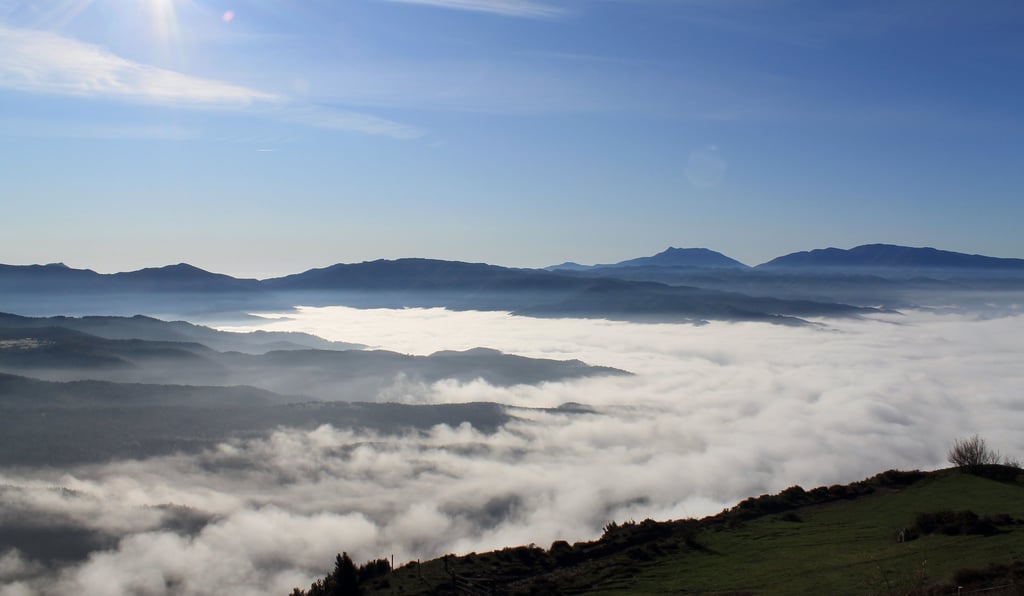
Morning fog fills the Plain of Vic, Catalonia (Spain), viewed from Tavertet. This sea of clouds illustrates how atmospheric moisture becomes an integral part of the natural water cycle, nourishing ecosystems and shaping the landscape.
Continue exploring the Water Cycle
• Groundwater: The Invisible Resource That Sustains Humanity
• Dew: The Small Drops That Sustain Life
• Clouds: Earth's Floating Freshwater Reservoirs
Pere Castells Teulats
Independent Researcher · Science Communicator
Water vs Oil