
What Is Groundwater?
Groundwater is one of Earth's most valuable natural resources, supplying drinking water to billions of people while sustaining ecosystems, agriculture and economic development. Despite its immense importance, it remains one of the least understood components of the global water cycle.
Groundwater: The Invisible Resource That Sustains Humanity
Why Earth's Most Important Freshwater Resource Is Invisible
For most people, freshwater is associated with rivers, lakes and reservoirs.
These visible water sources have sustained civilizations for thousands of years and continue to supply cities, agriculture and industry across the globe.
Yet much of the world's accessible freshwater remains hidden from view.
It lies silently beneath our feet.
Groundwater is one of Earth's most valuable natural resources, supplying drinking water to billions of people while sustaining ecosystems, agriculture and economic development.
Despite its immense importance, it remains one of the least understood components of the global water cycle.
As climate change intensifies and freshwater demand continues to grow, understanding groundwater may become essential for ensuring long-term global water security.
What Is Groundwater?
Groundwater is water stored beneath the Earth's surface within layers of soil, sand, gravel and fractured rock known as aquifers.
Rainfall and snowmelt gradually infiltrate the ground, where water accumulates over years, decades or even thousands of years.
Unlike rivers or lakes, groundwater is largely protected from evaporation.
This makes it one of the most reliable freshwater reserves available to humanity.
Millions of wells around the world depend on groundwater every day.
Without it, many cities, agricultural regions and entire communities simply could not exist.
The World's Hidden Freshwater Supply
Groundwater represents one of the largest and most important accessible freshwater reserves on Earth.
It supplies nearly half of the world's drinking water and supports a significant proportion of global irrigation.
Many of the world's most productive agricultural regions depend heavily on groundwater, including parts of:
the United States
India
China
Europe
Australia
North Africa
For countless communities, groundwater is not an alternative source of water.
It is the primary one.
Aquifers: Nature's Underground Reservoirs
Aquifers are geological formations capable of storing and transmitting groundwater.
Some are relatively shallow and recharge rapidly through rainfall.
Others contain fossil groundwater that has remained underground for thousands—or even tens of thousands—of years.
Each aquifer possesses unique geological characteristics.
Its capacity depends on factors such as rock type, sediment structure, permeability and natural recharge rates.
Understanding these characteristics is fundamental for sustainable groundwater management.
Growing Pressure on Groundwater
As freshwater demand continues to increase, many aquifers are being exploited faster than they can naturally recharge.
Population growth, intensive agriculture, industrial development and prolonged droughts have accelerated groundwater depletion in many parts of the world.
Overexploitation may lead to:
declining groundwater levels
land subsidence
reduced river flows
saltwater intrusion into coastal aquifers
ecosystem degradation
These challenges highlight the urgent need for responsible groundwater management.
Climate Change and Groundwater
Climate change is altering rainfall patterns across the planet.
Some regions experience longer droughts, while others face increasingly intense storms.
Ironically, heavy rainfall does not always increase groundwater recharge.
When rain falls too rapidly, much of it becomes surface runoff instead of infiltrating the soil.
Protecting natural recharge areas has therefore become increasingly important.
Urbanization and soil sealing further reduce the natural infiltration of rainwater into aquifers.
Healthy forests, wetlands and permeable landscapes all play an essential role in maintaining groundwater resources.
Groundwater and Food Security
Agriculture is the world's largest consumer of freshwater.
In many countries, irrigation depends primarily on groundwater.
This invisible resource helps produce food for billions of people.
Securing groundwater is therefore directly connected to:
food production
rural development
economic stability
social resilience
Without sustainable groundwater management, ensuring future food security will become increasingly difficult.
Beyond Land: Marine Aquifers
For many years, groundwater research focused almost exclusively on continental aquifers.
However, scientific studies have confirmed that freshwater also exists beneath many coastal seabeds.
These offshore freshwater systems represent one of the most promising frontiers in modern hydrogeological research.
Understanding how these marine aquifers formed, how they have remained preserved and how they should be protected may open new perspectives for future water security.
Knowledge must always come before exploitation.
The Water Era Begins Underground
The future of global water security will depend not only on rivers, lakes and reservoirs.
It will also depend on the groundwater hidden beneath our feet.
As populations continue to grow and climate challenges intensify, protecting aquifers may become one of humanity's greatest environmental responsibilities.
The Water Era is not only about discovering new freshwater resources.
It is about understanding, protecting and managing the invisible reserves that have sustained life for thousands of years.
Conclusion
Groundwater is one of the planet's greatest natural treasures.
Invisible to most people, it quietly supports cities, agriculture, ecosystems and economic development across every continent.
Protecting this hidden resource will require scientific knowledge, sustainable management and long-term planning.
In the emerging Water Era, understanding groundwater may become just as important as protecting it.
The future of freshwater begins beneath our feet.
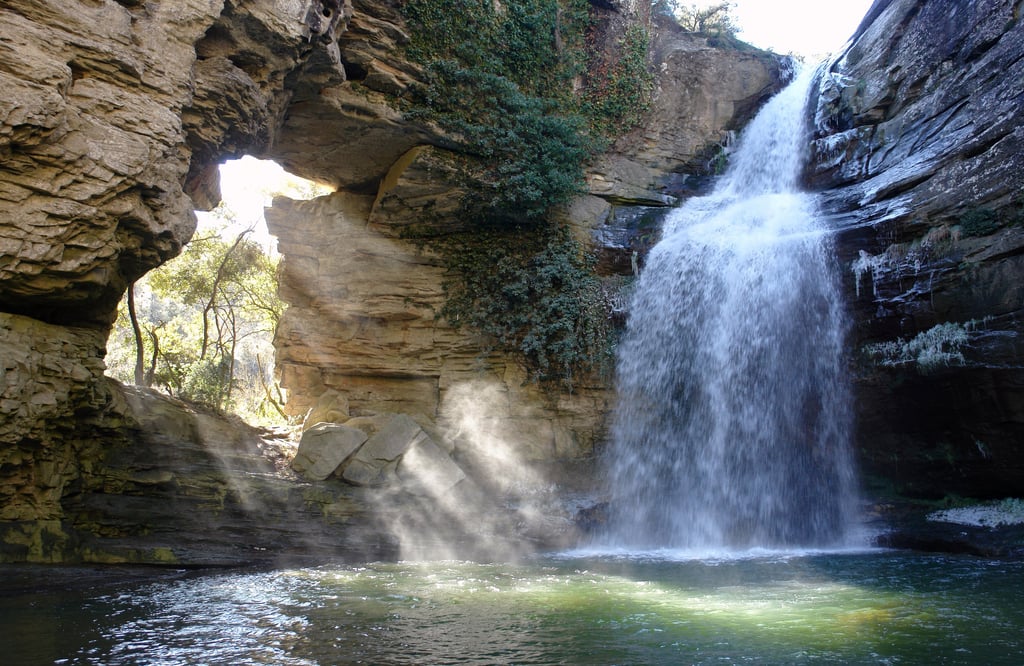
La Foradada (Catalonia, Spain). Groundwater naturally emerges to feed rivers, waterfalls and ecosystems.
Pere Castells Teulats
Independent Researcher · Science Communicator