
Who controls water controls the global economy
Water is becoming the strategic resource shaping the 21st century global economy. Explore its impact on technology, energy and geopolitics.
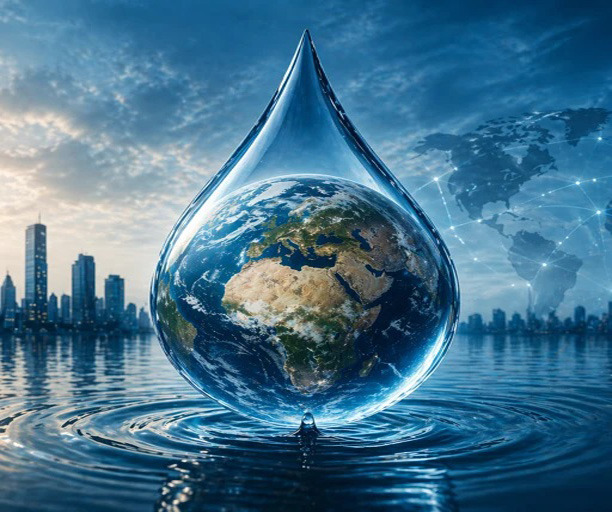
Who Controls Water Controls the Global Economy
Water as the defining resource of the 21st century
Water has always been essential for life.
But in the 21st century, it is becoming something more: a strategic asset capable of shaping economies, influencing geopolitics, and redefining global power structures.
From oil to water: a structural global shift
For decades, oil was considered the world’s most valuable resource. Nations built alliances, fought wars, and structured entire economies around access to energy.
Today, however, a quieter but more profound shift is underway.
Water—specifically fresh, accessible water—is emerging as the defining resource of our time.
Why every economic system depends on water
The logic is simple.
Every sector of the economy depends on water.
Agriculture accounts for around 70% of global freshwater withdrawals.
Industry relies on it for manufacturing, cooling, and processing.
Energy production requires vast quantities of water.
Even the digital economy depends on water-intensive data centers.
Water scarcity and economic disruption
Without water, there is no production.
Without production, there is no economy.
Climate change, population growth, and urbanization are creating a growing imbalance between supply and demand.
Global consequences: instability, markets and supply chains
Regions under water stress face:
declining agricultural yields
rising food prices
reduced industrial output
These disruptions extend to global markets and supply chains.
Water as an economic and geopolitical strategy
Control over water resources is not merely environmental.
It is strategic.
Countries with secure water gain structural advantages.
Others become vulnerable.
Transboundary water and power dynamics
Shared rivers such as the Nile, Tigris-Euphrates and Indus create geopolitical tension.
Infrastructure like dams can shift power between nations.
Infrastructure as a tool of global influence
Water infrastructure is no longer just technical.
It is:
economic security
geopolitical positioning
Water and the rise of investment and innovation
Investment in water technologies is accelerating:
desalination
recycling
smart monitoring
Water is becoming a domain of value creation.
A fundamental question: commodity or human right
Should water be:
a market-driven resource?
or a protected human right?
This decision will shape future societies.
The end of abundance: a new global reality
The era of taking water for granted is over.
Water and economic resilience in the 21st century
Future resilience depends on:
management
allocation
governance
Conclusion: control, power and the future
Who controls water controls the global economy.
And unlike oil, there is no substitute.
The global water crisis is not coming. It is already here.
Pere Castells Teulats
Researcher and science communicator